
Introduction
Have you ever wondered what the phrase secure the blessings of liberty truly means and why it remains important today? Many readers encounter this powerful expression in historical and constitutional discussions but struggle to understand its deeper significance and real-world relevance. This confusion can make it difficult to appreciate the principles of freedom, rights, and civic responsibility that the phrase represents.
In this article, you will discover the secure the blessings of liberty meaning in simple, clear language. We will explore its historical background, purpose, and lasting impact, helping you gain a deeper understanding of one of the most meaningful concepts in American history and government.
Secure the Blessings of Liberty Meaning Explained Clearly
Securing the blessings of liberty means protecting individual freedoms, personal freedom, and equal rights under fair laws. It promises freedom protection through protecting freedom, preserving liberty, and defending freedom using the rule of law and constitutional values.
This constitutional phrase reminds us that liberty includes civil liberties, human rights, and individual rights. It ensures rights protection so people can live free from unfair control, free from powerful groups, and protected from oppression, corruption, and unfair laws.
Why the Constitution’s Preamble Was Written
The introduction to the Constitution explains the goal of building a nation based on democratic principles and American democracy. The Preamble to the U.S. Constitution sets a moral guide for laws and defines the purpose of the Constitution clearly and simply.
It outlines government responsibility and citizen responsibility. It calls for limited government, checks and balances, and respect for freedom and justice protected forever by a system that serves the people, not controls them.
What Blessings of Liberty Truly Represent
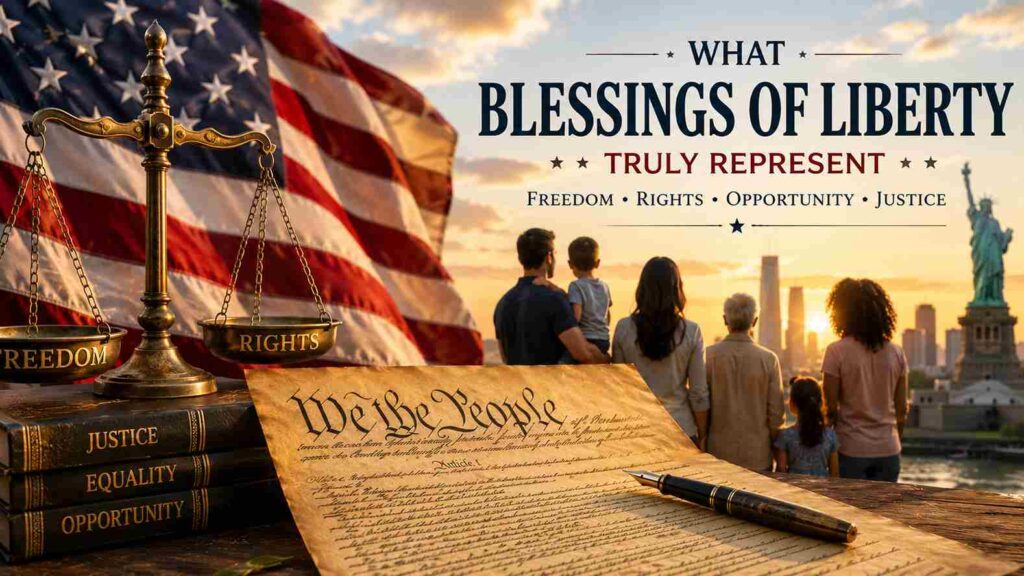
The blessings of liberty mean the good things that come from freedom. They include the freedom to express opinions, follow personal beliefs, choose a career path, and live without constant fear.
They also include rights that make life fair, rights that make life peaceful, and rights that make life meaningful. These blessings support equality, equal treatment, justice and fairness, and protection from unfair treatment.
To Ourselves and Posterity Explained Simply
The phrase to ourselves and our posterity shows a promise to future generations. The posterity meaning includes our children and grandchildren and everyone who comes after us.
This is a shared duty. It means keeping freedom safe, passing it on, and improving it so liberty remains strong for future generations in a changing world.
Liberty in the Preamble: Real Meaning Uncovered
Liberty in the Preamble highlights the meaning of liberty as freedom protected by fair systems. It connects liberty with justice system strength and equal education access.
The foundation of the Constitution shows that liberty is not permanent. Every generation must protect it or face the risk of losing liberty when power goes unchecked.
Founding Fathers’ Vision for Lasting Freedom
The Founding Fathers believed in a revolutionary idea of liberty. They wanted freedom regardless of background, freedom regardless of wealth, and a chance to live freely.
Their founding vision opposed taxation without representation and rejected misuse of power. They built a system where individual rights are protected by constitutional values.
How Government Secures the Blessings of Liberty
How the government secures liberty begins with the U.S. Constitution and the Bill of Rights. It protects free speech, freedom of religion, freedom of assembly, the right to vote, fair trials, and equal treatment.
Power is divided among the legislative branch, executive branch, and judicial branch through checks and balances. This structure prevents oppression and supports a government that guards liberty, not takes it away.
| Constitutional Protection | How It Secures Liberty |
| Bill of Rights | Guarantees core individual freedoms |
| Checks and balances | Prevents misuse of power |
| Rule of law | Ensures protection under fair laws |
Real-Life Examples of Liberty Being Protected
Real-life examples and everyday life examples show liberty in action. Voting in elections, choosing leaders, and civic participation keep power accountable.
Other examples include learning history, understanding rights, speaking up, community service, building unity, and keeping power in check through peaceful action.
Citizens’ Role in Preserving Freedom and Liberty
How citizens protect liberty depends on civic duty and social responsibility. Active citizens must stay informed, obeying fair laws, and treating others with respect.
This includes defending free expression, teaching children freedom, and care for one another. Liberty needs choices and courage from people who value personal freedom with responsibility.
How Liberty and Justice Depend on Each Other
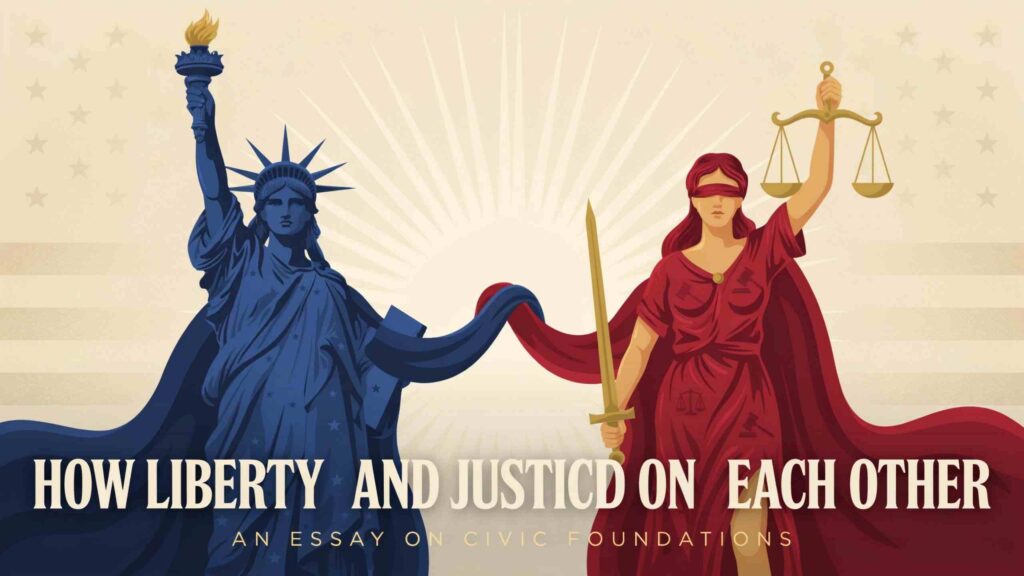
Liberty and justice connected means freedom survives when justice works. When rights violations happen, justice restores balance.
If justice fails liberty suffers. A strong justice system ensures fairness, participation, respect and keeps society strong and united.
Why Securing Liberty Still Matters Today
Liberty still matters today in a modern society and a world of constant change. New challenges include digital privacy, freedom of speech online, personal privacy, and access to opportunity.
Protecting digital privacy, equal education, and free society values helps people dream work speak without fear where every voice counts and every life has value.
Conclusion
Securing the blessings of liberty is not a promise that was completed in the past; it is a responsibility that continues in the present and must extend into the future. The Constitution provided a strong foundation, but liberty survives only when both government and citizens actively protect it. Laws, institutions, and rights matter, but so do everyday choices, awareness, and participation.
When people respect one another’s rights, speak up against unfairness, and remain engaged in civic life, liberty stays alive and meaningful. By understanding its meaning and living by its values, we honor the Founders’ vision and ensure that freedom, justice, and opportunity remain secure not only for ourselves, but also for generations yet to come.
FAQs
What does secure the blessings of liberty mean?
Securing the blessings of liberty means protecting freedom, rights, and equality through fair laws so people can live safely, freely, and with dignity.
Where does the phrase secure the blessings of liberty come from?
The phrase comes from the Preamble to the U.S. Constitution, which explains why the Constitution was written and what it aims to protect.
Why did the Founding Fathers include this phrase in the Constitution?
The Founding Fathers included it to ensure freedom would be protected not only for their time, but also for future generations.
What are the blessings of liberty?
The blessings of liberty include free speech, freedom of religion, the right to vote, fair trials, equal treatment, and living without fear or oppression.
Who is responsible for securing the blessings of liberty?
Both the government and citizens share responsibility. The government must protect rights through laws, while citizens must stay informed and active.
How does the government secure liberty?
The government secures liberty through the Constitution, the Bill of Rights, checks and balances, separation of powers, and the rule of law.
What role do citizens play in protecting liberty?
Citizens protect liberty by voting, obeying fair laws, respecting others’ rights, speaking up against injustice, and participating in civic life.
What does to ourselves and our posterity mean?
It means protecting freedom for ourselves and for future generations, including our children and grandchildren.
Is liberty permanent once it is established?
No. Liberty is not permanent. Every generation must protect it, or it can be lost when power goes unchecked.
How are liberty and justice connected?
Liberty depends on justice. When justice works, freedom survives. When justice fails, liberty suffers.
Why does securing liberty still matter today?
It matters because modern challenges like digital privacy, online speech, inequality, and access to opportunity can threaten freedom.
How can liberty be protected in everyday life?
Liberty is protected through education, community involvement, peaceful action, understanding rights, and holding leaders accountable.
What happens if liberty is not protected?
If liberty is not protected, society may face oppression, unfair laws, corruption, and loss of basic rights.
Why is the Constitution still important today?
The Constitution remains important because it continues to guide laws, protect freedoms, and limit misuse of power.
What is the main message of securing the blessings of liberty?
The main message is that freedom must be understood, protected, and passed on through shared responsibility and active participation.
READ MORE
May His Memory Be a Blessing: A Beautiful Meaning Explained